

Quick answer
The quebec city whale watching season runs from early May through late October, with the highest concentration of whales appearing between mid-June and mid-September. Minke whales and belugas remain present throughout the season, while blue whales and fin whales typically arrive in July and stay through September. Humpback sightings peak in August and early September.
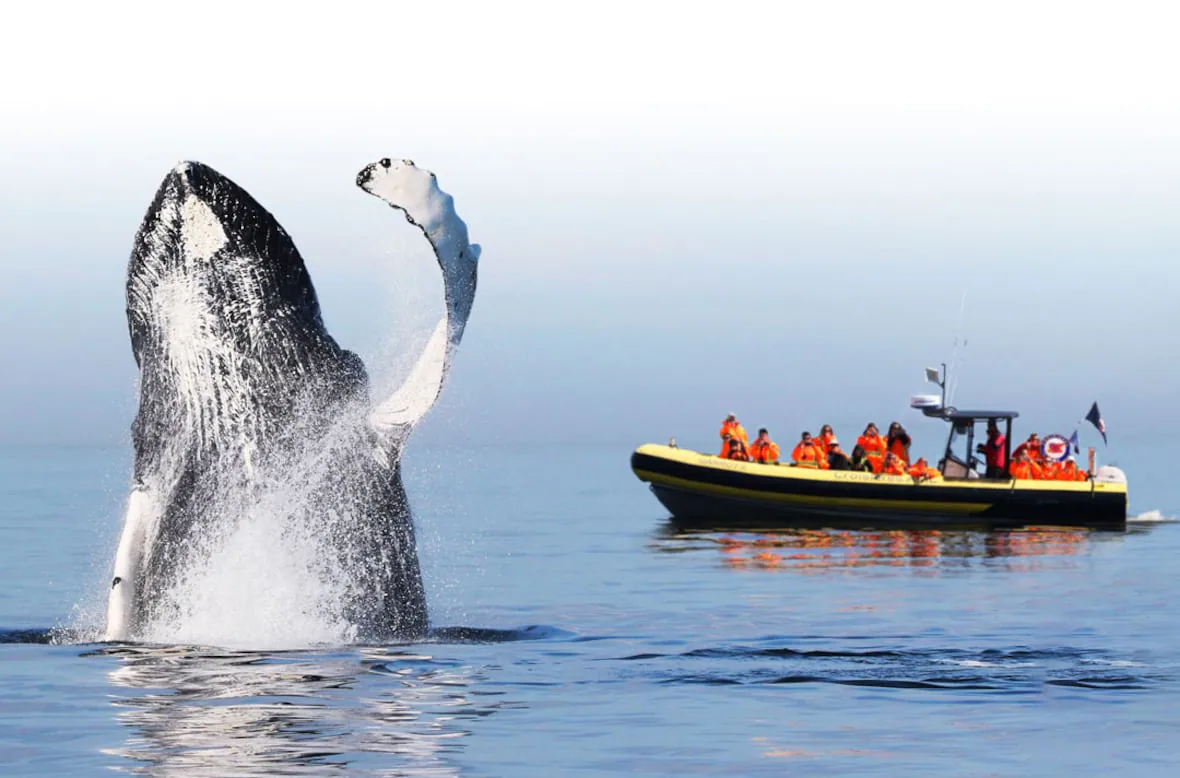
Thirteen whale species pass through the St. Lawrence estuary and Saguenay fjord confluence each year, making it the only location in Eastern Canada where deep-ocean giants feed within sight of shore. The marine park operates year-round, but whale activity follows a predictable migratory arc tied to capelin spawning and krill blooms. Minke whales arrive first, often spotted by early May as water temperatures rise above 4°C. Belugas remain in the estuary year-round but concentrate near Tadoussac during the quebec city whale watching season when prey density peaks. Blue whales—the largest animals ever to exist—appear in early July and stay through September, their presence tied to euphausid concentrations in the Laurentian Channel. Fin whales overlap with blues during this window, while humpbacks tend to arrive later in summer, with August and early September offering the most reliable sightings. The season's mid-point, late June through August, delivers the greatest species diversity. Observers may encounter five or six species in a single outing, from harbour porpoises in the shallows to fin whales feeding offshore. Water clarity improves as spring runoff subsides, and calmer conditions make surface behaviour easier to spot. September extends the whale watching window but narrows species variety as blues and fins begin their southward migration. Most commercial operators run daily departures from Tadoussac, Baie-Sainte-Catherine, and Les Escoumins between late May and mid-October, aligning their schedules with marine park regulations and whale presence. The St. Lawrence maritime ecosystem supports this activity without requiring artificial attractions—whales feed here because the bathymetry funnels nutrient-rich currents into a confined space, not because tour boats draw them in.
“Thirteen whale species pass through the St. Lawrence estuary each year, making it the only location in Eastern Canada where deep-ocean giants feed within sight of shore.”
Understanding the Quebec City Whale Watching Season
The prime season for whale watching in the Saguenay–St. Lawrence Marine Park spans from May to October, when migratory species congregate to feed. Early morning hours offer the most favorable conditions for spotting marine mammals due to calmer water surfaces.
May to June
Moderate crowdsCool, 5°C to 15°C
Whales begin arriving as ice clears and feeding grounds become active.
July to August
Peak crowdsWarm, 15°C to 25°C
This period offers the highest frequency of sightings for various whale species.
September to October
Decreasing crowdsCooling, 5°C to 18°C
Active feeding continues before the whales depart for their winter migration.
08:00–10:00
——
Calmer waters and lower marine traffic improve whale spotting and hearing opportunities.
Verdict: For optimal conditions, plan your visit for a weekday morning between 08:00 and 10:00 during the months of July or August.
Traveling to the Quebec City Whale Watching Season Departure Point
Tadoussac serves as the primary gateway for whale watching in the Saguenay–St. Lawrence Marine Park, located approximately 215 kilometers northeast of Quebec City. Visitors typically reach the departure point by vehicle or regional bus services.
Highway QC-138 East to Tadoussac
Intercar line from Quebec City to Tadoussac
Bateau-passeur (ferry) across Saguenay Fjord
Daily Operational Hours During the Quebec City Whale Watching Season
The Saguenay–St. Lawrence Marine Park facilities maintain consistent daily operating hours throughout the whale watching season to assist with visitor planning.
| Monday | 08:00–18:00 | |
|---|---|---|
| Tuesday | 08:00–18:00 | |
| Wednesday | 08:00–18:00 | |
| Thursday | 08:00–18:00 | |
| Friday | 08:00–18:00 | |
| Saturday | 08:00–18:00 | |
| Sunday | 08:00–18:00 |
Admission and Fees for the Quebec City Whale Watching Season
Admission to the Saguenay–St. Lawrence Marine Park itself is free. Costs for your excursion depend entirely on the specific boat tour or interpretation center you choose to visit.
Visitors pay 0 CAD for park access, while total trip costs vary based on the specific boat tour or interpretive service selected.
Essential Preparation for Your Quebec City Whale Watching Season Trip
Prepare for variable marine conditions and extended time on open water to ensure comfort throughout your excursion.
-
Book your whale watching tour in advance — Peak season departures fill quickly, especially morning slots.
-
Pack warm, layered clothing — St. Lawrence waters create wind chill even in summer months.
-
Bring a waterproof outer layer — Spray from waves and sudden weather changes are common on the river.
-
Wear non-slip, closed-toe shoes — Boat decks become slippery from water and movement.
-
Apply sunscreen and bring sunglasses — Sun reflection off water intensifies exposure during multi-hour trips.
-
Carry motion sickness medication if needed — Open-water swells affect many passengers, particularly in the estuary.
-
Bring binoculars for distant sightings — Whales surface unpredictably and may appear far from the vessel.
Check availability
Common Questions Regarding Quebec City Whale Watching Season
Everything you need to know about quebec city whale watching season