

Quick answer
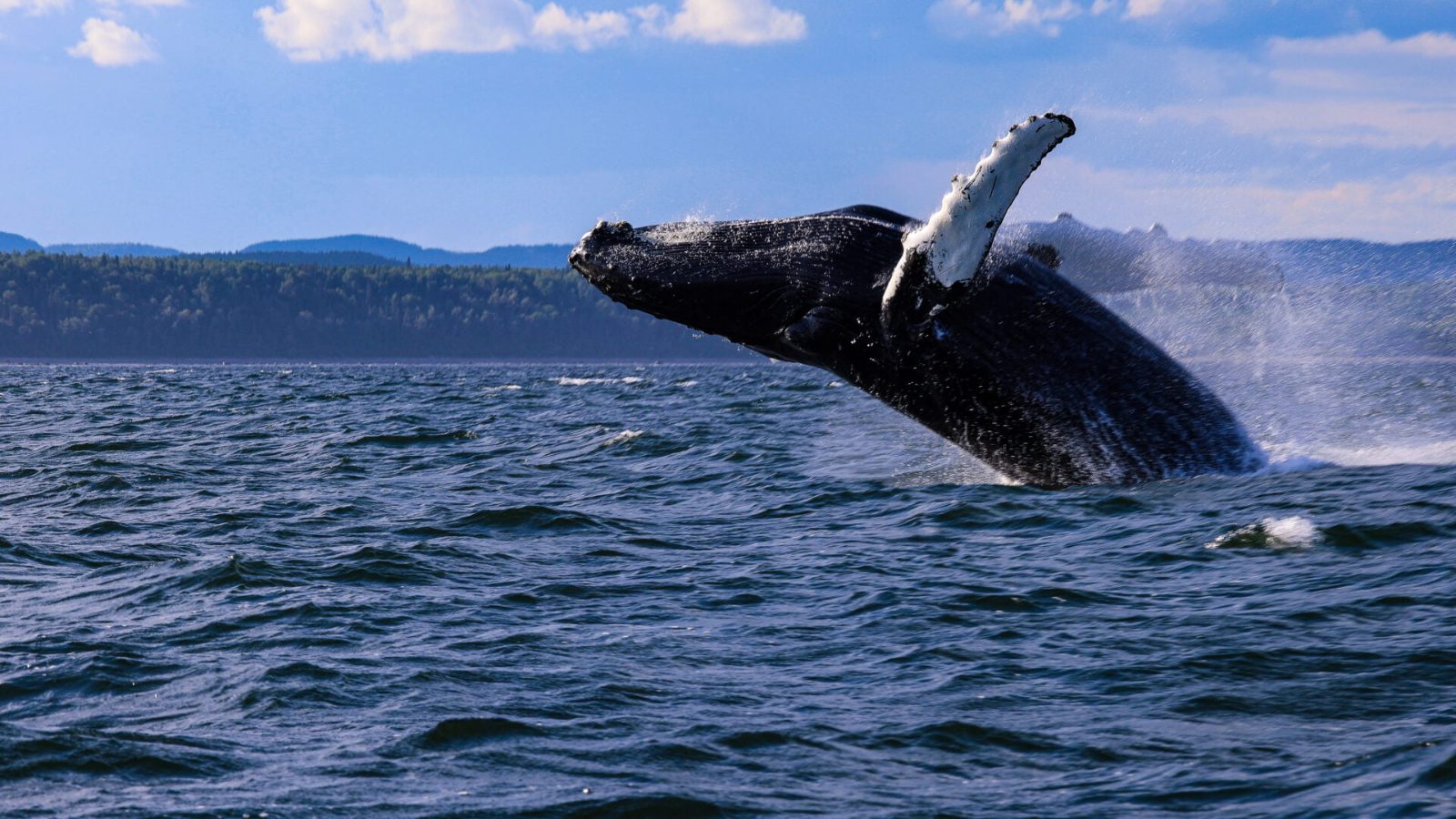
No, you cannot see whales in Quebec City. The freshwater conditions at the capital prevent marine mammals from traveling this far upstream. Whales congregate where the St. Lawrence widens and salinity rises—approximately 200 kilometers northeast in the Saguenay-St. Lawrence Marine Park near Tadoussac, where cold nutrient-rich currents sustain the krill and capelin that feed belugas, minke whales, and fin whales throughout the summer season.
The St. Lawrence at Quebec City carries no salt. Freshwater dominates from the Great Lakes all the way to Île d'Orléans, and marine mammals require brackish or fully saline conditions to survive. The ecological threshold sits roughly 150 kilometers downstream from the capital, where tidal mixing begins to elevate salinity and the river corridor widens into an estuary. Whale watching near Quebec City means leaving the city behind. Tadoussac, perched at the confluence of the Saguenay Fjord and the St. Lawrence estuary, marks the western edge of reliable sightings. Belugas patrol the fjord's mouth year-round, while seasonal visitors—minke whales from May through October, occasional blues and humpbacks in deeper channels—follow prey concentrations that shift with water temperature and current. The marine park's boundaries protect 1,245 square kilometers of feeding habitat, and most tour operators launch from Tadoussac, Baie-Sainte-Catherine, or Les Escoumins to reach the zones where cetaceans surface predictably. Visitors based in Quebec City face a three-hour drive each way, departing early to meet morning zodiac or cruiser schedules. Day-trip logistics hinge on departure time: tours typically launch between 9:00 and 13:00, with the return leg adding another three hours of highway travel. Overnight stays in Tadoussac or Baie-Sainte-Catherine eliminate the pre-dawn start and allow multi-day itineraries that pair whale encounters with coastal hiking and fjord navigation. Can you see whales in Quebec City itself? No—but the capital serves as a natural staging point for travelers building a St. Lawrence itinerary that extends into the estuary's wildlife corridors. The journey downstream is the price of entry to one of the most accessible marine-mammal aggregation sites in the North Atlantic. No whale watching tours depart directly from Quebec City. Independent travelers arrange their own transport to Tadoussac or book through regional operators who include coach transfer in package rates, though those bundled options typically add cost and reduce schedule flexibility compared to self-drive approaches.
“The ecological threshold sits roughly 150 kilometers downstream from the capital, where tidal mixing begins to elevate salinity and the river corridor widens into an estuary.”
When Can You See Whales In Quebec City and How to Find Them
Whales are not found in the fresh water of Quebec City; travel to the Saguenay-St. Lawrence Marine Park near Tadoussac is required. The peak season for sightings occurs from May through October when migratory species return to the estuary.
May to June
Moderate crowdsCool, 8°C to 18°C
Migratory species arrive in the estuary to feed as waters warm.
July to August
High crowdsWarm, 15°C to 25°C
This period offers the highest frequency of sightings and stable weather conditions.
September to October
Lower crowdsChilly, 5°C to 15°C
Whale activity remains high as animals prepare for southern migration before the winter freeze.
Verdict: The best window for whale watching is from July to August when biological activity in the Saguenay-St. Lawrence Marine Park peaks.
How To Get There: Can You See Whales In Quebec City Without Traveling?
Whale watching does not occur directly in Quebec City because the St. Lawrence River remains fresh water there. To see whales, you must travel northeast to Tadoussac or Baie-Sainte-Catherine, a journey of approximately 215 kilometers.
Highway 138 East
Intercar from Gare du Palais to Tadoussac
Private cruise transfer from Quebec City
Planning Your Day Trip: Can You See Whales In Quebec City On A Schedule?
This itinerary suits visitors based in Quebec City who want to experience whale watching in the St. Lawrence marine park. The full day requires 6–7 hours of driving plus 2–3 hours on the water.
Depart Quebec City
Leave early for the 220 km drive to Tadoussac, the nearest departure point for whale watching cruises. The route follows Highway 138 along the north shore and takes approximately 3 hours.
Arrive in Tadoussac
Park near the marina and check in with your tour operator. Most morning departures leave between 09:30 and 10:00, giving you time to use facilities and board.
Whale Watching Cruise
Spend 2–3 hours on the water in the confluence zone where the Saguenay meets the St. Lawrence. Minke whales, belugas, and finback whales are commonly observed here from May through October.
Lunch in Tadoussac
The village offers cafés and restaurants within walking distance of the docks. Waterfront spots provide views over the bay.
Begin Return Drive
Depart Tadoussac for the 3-hour return journey to Quebec City. Factor in a rest stop if needed.
Arrive Quebec City
You'll return to the city by early evening, completing a full but rewarding day trip to the marine park.
Check availability
Frequently asked questions about can you see whales in quebec city
Everything you need to know about can you see whales in quebec city