

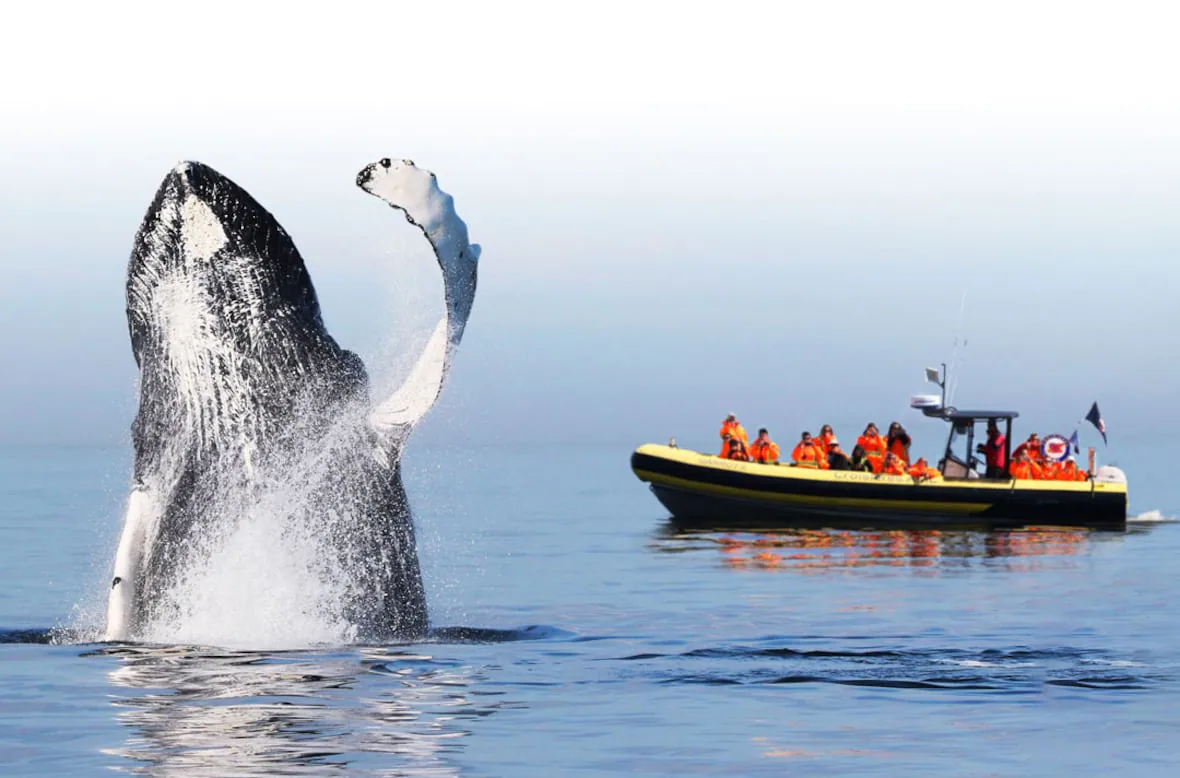
Quick answer
The best time of year for Quebec City whale watching runs from mid-June through late October, with the peak season concentrated in July and August when up to thirteen whale species migrate through the St. Lawrence estuary. Blue whales and fin whales arrive in greatest numbers during this window, while belugas remain resident year-round in the Saguenay fjord confluence.
More than 2,700 beluga whales maintain a permanent population in the Saguenay–St. Lawrence confluence, the only resident white whale colony south of the Arctic Circle. This ecological anchor draws migratory rorquals into one of the planet's richest cold-water feeding zones, where upwelling currents push krill and capelin toward the surface throughout the summer feeding season. Understanding the quebec city whale watching best time of year requires mapping three overlapping migration curves. Minke whales arrive first in late May, followed by fin whales and humpbacks in mid-June, and blue whales—the largest animals ever to exist—peak in August and early September. Water temperature governs the entire sequence: the St. Lawrence estuary remains below 10°C until late June, delaying the krill bloom that drives the food chain. By mid-July the convergence of cold Labrador Current water and warmer Gulf of St. Lawrence inflow creates turbulent nutrient zones that concentrate prey species within a narrow coastal band. Weather stability peaks during the July–August corridor when fog frequency drops and wind speeds average below fifteen knots. September offers a strategic trade: thinner crowds and stable species presence against shorter daylight and rising sea states as autumn storm tracks shift south. The Saguenay–St. Lawrence Marine Park maintains open access throughout the season with departures running daily from 09:00 to 16:00, though morning trips benefit from calmer water and higher whale surface activity before midday thermal shifts push animals deeper. Marine mammal observation follows federal approach regulations that mandate 400-meter separation distances for most species and 200 meters for belugas, enforced within park boundaries to protect nursing calves and feeding behaviour. Late-season visits in October see humpback and fin whale numbers decline sharply as animals begin their southward migration, though beluga pods remain visible near the fjord mouth through November. The seasonal window for optimal whale watching in the St. Lawrence estuary closes by early November when vessel operators suspend tours due to weather exposure and reduced sighting reliability.
“The St. Lawrence estuary remains one of the few places on Earth where blue whales—animals longer than a basketball court—feed within sight of shore.”
Quebec City Whale Watching Best Time of Year: Seasonal and Daily Windows
The period from July through August marks the peak of whale activity in the Saguenay–St. Lawrence Marine Park, offering the most consistent conditions for sightings. Aligning your visit with the optimal arrival window ensures better weather and increased opportunities to observe marine mammals.
May–June
ModerateCool, 10°C to 18°C
Whales begin returning to the estuary as ice clears. Sightings are reliable but less frequent than peak summer months.
July–August
HighWarm, 18°C to 25°C
This is the peak season for whale activity. Marine mammals are most active during this window.
September–October
ModerateMild to cool, 5°C to 15°C
Whales remain present as they feed before migration. Cooler temperatures accompany quieter visitor periods.
Daily 09:00–16:00
Variable—
This window offers the most reliable conditions for whale activity and favorable weather. Arriving early maximizes your chances of sightings.
Verdict: The best time for whale watching is between July and August, specifically arriving between 09:00 and 16:00 to capitalize on peak marine activity.
Quebec City Whale Watching Best Time of Year: Daily Operating Hours
The Saguenay–St. Lawrence Marine Park maintains consistent daily operational hours throughout the week to facilitate visitor access. These hours apply to the administrative and informational facilities supporting whale watching activities in the region.
| Monday | 09:00–17:00 | |
|---|---|---|
| Tuesday | 09:00–17:00 | |
| Wednesday | 09:00–17:00 | |
| Thursday | 09:00–17:00 | |
| Friday | 09:00–17:00 | |
| Saturday | 09:00–17:00 | |
| Sunday | 09:00–17:00 |
Quebec City Whale Watching Best Time of Year: Admission and Fees
Access to the Saguenay–St. Lawrence Marine Park for general observation is provided without an entrance fee. Costs associated with whale watching are exclusively related to private boat tour operators, which are separate paid activities.
There is no entrance fee to the marine park, though visitors must pay separate fees to private companies for boat tour services.
Quebec City Whale Watching Best Time of Year: Planning Your Arrival
Tadoussac sits at the confluence of the Saguenay and St. Lawrence rivers, approximately 215 kilometers northeast of Quebec City. The most direct approach is by car via Route 138 East.
Route 138 East to the Tadoussac–Baie-Sainte-Catherine ferry
Intercar coach service from Quebec City to Tadoussac
Quebec City Whale Watching Best Time of Year: Practical Preparation Tips
Preparation ensures comfort while observing marine mammals in the Saguenay–St. Lawrence Marine Park.
Layer your clothing
Temperatures on the water remain significantly lower than on land, even during the peak July and August season. Wear windproof layers to maintain body heat during extended time on the deck.
Manage motion sickness
Opt for a seat near the center of the vessel, which experiences less pitch and roll than the bow or stern. Take preventative medication at least one hour before boarding if you are sensitive to boat movement.
Protect your equipment
Salt spray is common in the marine environment and can damage lenses or electronic devices. Keep cameras and phones in waterproof bags when not in active use to prevent corrosion.
Choose polarized eyewear
Polarized sunglasses reduce glare reflected off the water surface, making it easier to spot whale blows and dorsal fins. This simple adjustment significantly increases your chances of tracking movement from a distance.
Plan for weather variability
Marine conditions shift rapidly regardless of the season. Bring a hooded raincoat to protect against unexpected precipitation and high-velocity wind chill.
Check availability
Frequently Asked Questions About Whale Watching Timing
Everything you need to know about quebec city whale watching best time of year